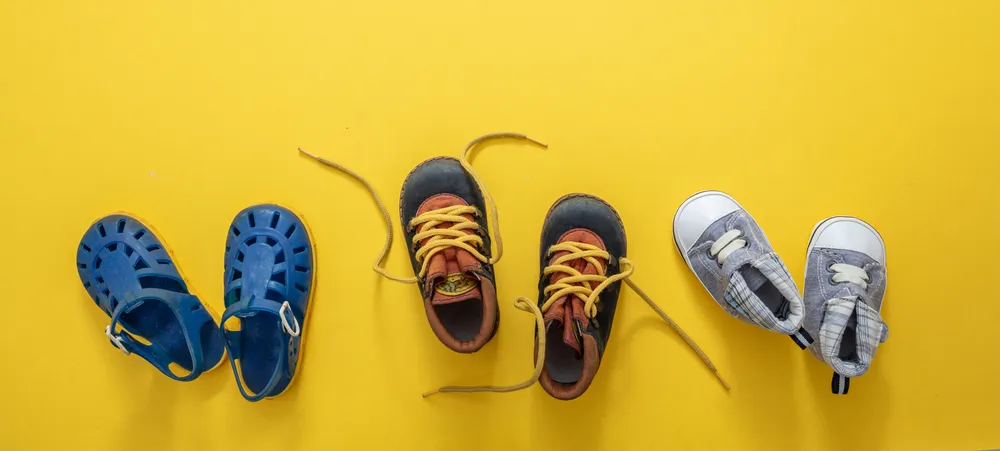
Quick answer: Measure your child's feet every 2–3 months, since kids can grow up to two shoe sizes per year. Stand them on paper in the afternoon, trace both feet, and buy for the larger foot. Leave about half an inch of growing room at the toe for the best fit. Ill-fitting shoes are one of the most common — and most overlooked — problems in kids' foot health. Shoes that are too tight can cause blisters, ingrown toenails, and postural issues. Shoes that are too loose can lead to tripping and ankle instability. The good news? Measuring kids' shoes accurately takes just a few minutes and makes a real difference. Here's everything parents need to know about keeping growing kids in shoes that fit well.
How Often Should You Measure Your Child's Feet?
Measure your child's feet every 2 to 3 months. Kids can grow up to two shoe sizes in a single year, which means a pair that fits perfectly in January may be too snug by spring. Don't rely on how a shoe "looks" — children often don't complain about tightness until discomfort becomes pain.
Accurate Measurement Techniques for Kids' Shoes
1. Do It in the Afternoon
Feet naturally swell throughout the day, so measuring in the afternoon gives you the most accurate reading. A shoe that fits in the morning may feel tight by the afternoon if you've sized based on an early measurement.
2. Trace Their Feet
Have your child stand upright with their weight evenly distributed on a flat piece of paper. Trace the outline of both feet carefully, keeping the pen vertical. Make sure their toes are relaxed and not curled — curled toes lead to a shorter tracing and an inaccurate size.
3. Mark the Length and Width
Draw parallel lines at the back of the heel and the tip of the longest toe, then measure the distance between them. For width, wrap a soft measuring tape around the widest part of the foot.
4. Fit to the Larger Foot
It's completely normal for one foot to be slightly larger than the other. Always use the measurements from the larger foot when selecting a shoe size.
Finding the Perfect Fit for Growing Kids
Check the Growing Room
There should be about a half-inch (1 cm) of space between your child's longest toe and the end of the shoe — roughly the width of an adult thumb. This growing room allows natural movement and accounts for foot growth between fittings.
The Insole Test
If you're unsure about the thumb-press test, pull out the shoe's insole and have your child stand on it with their heel aligned. Their longest toe should stop just short of the insole's end. This method gives you a clear visual reference without guessing.
The Width Check
The shoe should feel snug across the foot — but not pinching. If the small toe presses hard against the side of the shoe, size up in width. Many brands offer wide-fit options specifically for growing kids.
Prioritize Flexibility
For toddlers and new walkers, choose shoes made from flexible, breathable materials with rounded, nonslip rubber soles. Rigid shoes can interfere with natural foot development at this stage.
Ensuring Happy, Healthy Feet
Measuring kids' shoes doesn't have to be complicated. Check every 2 to 3 months, trace both feet in the afternoon, account for width, and always buy for the larger foot. These small habits go a long way toward keeping growing kids comfortable and supporting healthy foot development. Visit Humphrey's Bootery for expert help fitting your child's next pair of shoes. Our team specializes in finding the right fit for growing kids — because the right shoe makes all the difference.
Frequently Asked Questions
How do I know if my child's shoes are too small?
Signs include redness or blisters on the toes, your child complaining of foot pain, or toes visibly pressing against the front of the shoe. Check the fit every 2–3 months to catch sizing issues early.
What is the right amount of growing room in kids' shoes?
Leave approximately half an inch (1 cm) — about a thumb's width — between the longest toe and the end of the shoe. This allows room for natural movement and growth.
What shoe features are best for toddlers?
For toddlers and new walkers, look for flexible soles, breathable materials, and nonslip rubber bottoms. Avoid stiff or rigid shoes, which can restrict natural foot development.
Should I size up if one foot is bigger than the other?
Yes. Always fit the larger foot. A shoe that fits the smaller foot may pinch or restrict the larger one, leading to discomfort over time.